

Description:
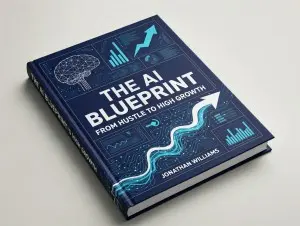
Embarking on the journey to build an AI business in 2026 is no longer a distant dream reserved for tech elites in metropolitan hubs; it is a tangible, actionable reality for ambitious individuals across India. This comprehensive blueprint is designed to demystify the process, breaking down the path from initial concept to scalable empire into ten logical, sequential steps. We move beyond mere theory to provide a practical, field-tested guide that emphasizes the powerful synergy between accessible artificial intelligence tools and irreplaceable human insight. You will learn how to identify a genuine market need in your local community, master the essential AI technologies without a coding background, and package your skills into services that solve real problems. This guide is crafted for the student in Lucknow, the homemaker in Coimbatore, and the professional in Pune—anyone with the drive to create. We delve into the critical phases of client acquisition, hybrid human-AI workflow creation, business systematization, and ethical scaling. Whether your goal is to launch a profitable side hustle or to found a high-growth venture, this post provides the structured roadmap, relatable Indian context, and motivational push to start executing today. The future of entrepreneurship is intelligent, adaptive, and inclusive. This is your manual to claim your place in it.
1. Identify a Clear, Profitable Need in Your Market

The foundation of any sustainable venture is a genuine problem that requires a solution. To successfully build an AI business, you must move beyond a fascination with the technology itself and focus intently on the human or commercial pain points it can alleviate. Conduct informal market research by observing the frustrations of local shopkeepers, professionals, or educators in your community. Is inventory management a constant headache for a nearby retailer? Do freelance writers in your network struggle with content consistency? Your goal is to pinpoint a specific, recurring challenge where AI-powered efficiency or augmentation can deliver disproportionate value. This problem-solution fit is the critical first cornerstone upon which you will build an AI business that is relevant and sought-after.
2. Master a Core Suite of Accessible AI Tools

Proficiency with technology is non-negotiable, but this does not mean you need a degree in computer science. The modern ecosystem offers a powerful array of intuitive, often free-tier tools designed for creators and entrepreneurs. To build an AI business with efficiency, dedicate time to achieving fluency in a select few. For instance, achieve mastery in a large language model like ChatGPT or Claude for ideation and drafting, a visual AI tool like Midjourney or DALL-E for imagery, and a process automation platform like Zapier. The objective is not to know every tool, but to deeply understand the capabilities and limitations of your chosen toolkit. This expertise allows you to translate a client’s need into a series of precise prompts and workflows, thereby transforming your knowledge into a reliable service. This technical command is what will allow you to build an AI business that delivers consistent, high-quality results.
3. Design and Package a Minimum Viable Service (MVS)

Resist the urge to launch with a grandiose, all-encompassing suite of offerings. Instead, apply the lean startup methodology by designing a Minimum Viable Service. This is a streamlined, clearly defined package that addresses the core problem you identified, using the AI tools you’ve mastered. For example, if targeting small businesses, your MVS could be “The Local SEO Starter Pack: 10 AI-optimized business descriptions and 5 blog post outlines.” This approach allows you to build an AI business with a low barrier to entry for both yourself and your first clients. It creates a manageable scope for delivery, enables you to refine your process based on real feedback, and establishes a tangible product you can market. This focused service is the vehicle through which you will test your business hypothesis in the real world and begin to build an AI business reputation.
4. Acquire Your First Paying Clients through Trust-Based Networking

Initial client acquisition is less about advertising and more about demonstration and trust-building. Leverage your existing network—not just for sales, but for conversations. Explain clearly how you can build an AI business solution for their specific challenge. Offer a pilot project or a heavily discounted first engagement in exchange for a detailed testimonial and case study. The goal of this phase is to generate social proof, not just immediate revenue. A single, successful project with a verifiable result for a real client becomes your most powerful marketing asset. It transforms your claim of being able to build an AI business from an idea into a proven fact, making it significantly easier to attract subsequent clients at your full rate.
5. Execute with a Hybrid Human-AI Delivery Model

Your delivery process is where your unique value proposition comes to life. Use AI as a force multiplier for productivity and scale, but never as a complete substitute for human judgment and nuance. The workflow to build an AI business that stands out is a hybrid model: utilize AI for the heavy lifting of data processing, initial content generation, or draft creation, then apply your critical thinking, cultural understanding, and quality assurance. For a client in Varanasi, an AI can draft a blog post about silk sarees, but you must infuse it with the correct local terminology, historical context, and emotional resonance. This combination ensures speed and scalability while guaranteeing the final output is authentic, accurate, and tailored. This disciplined process is essential to build an AI business known for quality, not just automation.
6. Systematize Operations for Scalability and Consistency

Transition from a freelancer mindset to a business owner mindset by documenting and systemizing every repeatable task. This is how you build an AI business that can grow beyond your personal time constraints. Create standard operating procedures (SOPs) for onboarding clients, using your AI tools, conducting revisions, and delivering final work. Use low-cost project management tools like Trello or Notion to track progress. Automate administrative tasks like invoicing with platforms like PayPal or Khatabook. By creating these systems, you are not just completing work; you are building a replicable framework. This operational backbone is what will allow you to build an AI business that can eventually delegate tasks or onboard team members without sacrificing quality.
7. Develop Tiered Service Packages for Revenue Growth

With proven systems and a portfolio of successful projects, you can now strategically increase your revenue. Analyze the recurring needs of your initial clients and develop tiered service packages. This is a strategic move to build an AI business with predictable, recurring income. For instance, offer a “Basic” package for social media content, a “Professional” package that adds email newsletter creation, and an “Enterprise” package that includes monthly strategy consulting. Packaging services in this way simplifies the buying decision for clients, increases your average transaction value, and encourages longer-term retainers. This structured approach to monetization is crucial to build an AI business that moves from project-based unpredictability to stable monthly revenue.
8. Establish a Professional Digital Footprint

A credible, focused online presence acts as a 24/7 salesman for your enterprise. To build an AI business that attracts inbound interest, you must curate this presence thoughtfully. Develop a simple, clean website on a platform like Carrd or Wix that clearly states what you do, who you help, and showcases your work through case studies. Simultaneously, maintain an active professional profile on a platform relevant to your audience, such as LinkedIn for B2B services or Instagram for visual creative services. Share valuable insights, not just advertisements; post short tips on using AI in your industry, behind-the-scenes glimpses of your process, and client success stories. This consistent activity demonstrates expertise and helps you build an AI business brand that is discoverable and trusted.
9. Commit to Continuous Learning and Ethical Practice

The field of artificial intelligence is evolving at a breathtaking pace. A commitment to lifelong learning is not optional; it is the fuel for long-term competitiveness. To build an AI business that endures, you must dedicate regular time to education. Follow reputable tech analysts, take new micro-courses on emerging tools, and participate in online communities. Equally important is establishing a strong ethical framework for your work. Be transparent with clients about your use of AI, rigorously check AI outputs for bias and inaccuracy, and prioritize data privacy. Adhering to these principles will help you build an AI business that is respected, responsible, and built for the future, avoiding the pitfalls of a purely opportunistic approach.
10. Scale by Productizing Knowledge or Building a Team

The final stage in your journey to build an AI business empire involves scaling your impact beyond your direct labor. This can be achieved through one of two primary paths: productization or team building. You can productize your knowledge by creating digital products—such as an online course, template pack, or detailed ebook—that teach your specific methodology to others. This allows you to scale your income exponentially. Alternatively, you can scale by building a small team, training them in your systematized processes, and taking on the role of a visionary and quality controller. This path allows you to increase your service capacity dramatically. Choosing your scaling strategy is the definitive step to build an AI business that creates lasting wealth and legacy.
Conclusion:

The strategic pathway to build an AI business is a marathon of deliberate steps, not a sprint of random effort. As we have outlined, success hinges on starting with a clear problem, not just a shiny tool, and progressing through stages of mastery, systematization, and ethical scaling. The true differentiator in the 2026 landscape will not be who has access to the most advanced AI—access is increasingly democratized—but who can most effectively combine that technological leverage with human creativity, cultural nuance, and strategic vision. From Ramesh Sir in Maharashtra to the dietitian in Hyderabad, the proof is evident across India: sustainable empires are built by those who use AI to amplify their unique value, not replace it. You now possess the fundamental blueprint. The tools are at your fingertips, many of them free to start. The market is ripe with opportunity. The only remaining ingredient is your decision to begin. Let this guide be the catalyst. Take that first step today: define your niche, experiment with one tool, and speak to your first potential client. The journey of a thousand miles begins with a single, well-informed prompt. Your future as an AI-powered entrepreneur starts now.
FAQ (Frequently Asked Questions)
1. Q: I have no technical background or coding skills. Can I really build an AI business?

A: Absolutely. The modern AI ecosystem is built on user-friendly, no-code platforms. To build an AI business, you need to become skilled at directing AI using clear instructions (prompting) and orchestrating workflows, not at writing complex code. Your domain knowledge and understanding of client needs are more valuable.
2. Q: What is the minimum investment required to start?
A: You can begin with almost zero financial investment. Many powerful AI tools (like ChatGPT, Canva, Gemini) have robust free tiers. Your primary investments will be time (for learning and execution) and a small amount for internet data. As you build an AI business, you can reinvest initial earnings into paid tool upgrades.
3. Q: How do I find my first client in India?
A: Start within your immediate network. Use WhatsApp, LinkedIn, and local community groups. Offer a pilot project or a significant discount for a detailed testimonial. Your first goal is to prove your concept and gain a case study, which is crucial to build an AI business reputation.
4. Q: Is AI content considered duplicate or spam by Google?

A: Raw, unedited AI output can be problematic. The key is to use AI as a drafting assistant. You must heavily edit, add personal insights, local examples, and human experience. This “human in the loop” model creates original, valuable content that helps you build an AI business trusted by both clients and algorithms.
5. Q: Which niche is most profitable for beginners in India?
A: High-demand, low-complexity niches include AI-powered social media management for small businesses, content localization and translation, personalized tutoring materials, and basic data analysis/reporting for MSMEs. Choose one aligned with your interest to sustainably build an AI business.
6. Q: How do I price my AI-augmented services?
A: Do not price based on the minutes AI saves you. Price based on the value you deliver to the client. Research what freelancers charge for that service without AI, and price competitively. As you build an AI business and demonstrate results, you can transition to value-based pricing for packages.
7. Q: What are the legal or ethical concerns?

A: Always be transparent with clients about your use of AI tools. Ensure you have the right to use any data or images you input. Respect copyrights. As you build an AI business, prioritize data privacy (follow DPDPA principles) and fact-check all AI-generated information to maintain trust.
8. Q: How can I scale beyond being a solo freelancer?
A: Scaling requires systematization. Document all processes (SOPs), productize your services into defined packages, and then explore either building a small team to handle increased volume or creating digital products (courses, templates) based on your methodology to build an AI business that earns beyond your time.
9. Q: Which AI tools are best for an Indian audience?
A: Start with multimodal tools that handle Indian languages well, like GPT-4 (through platforms like ChatGPT), Google’s Gemini, and image tools like Midjourney or DALL-E 3. For video, consider using AI subtitle generators and editors like CapCut that support Indian dialects as you build an AI business.
10. Q: How do I stay updated without getting overwhelmed?
A: Follow 2-3 reputable Indian tech news sources or newsletters. Join one focused online community (like a dedicated WhatsApp or Telegram group). Dedicate just 30-60 minutes per week to exploring one new feature or tool. Consistent, small learning increments are key to build an AI business that stays current.
Bạn có thể tạo hồ sơ chơi riêng cho từng thể loại tại đăng ký 188v – ví dụ: một profile cho slot cổ điển, một cho jackpot – giúp quản lý chiến lược và ngân sách hiệu quả hơn. TONY02-11O